
Match Paper to Your Leather Journal: Dot Grid vs Lined
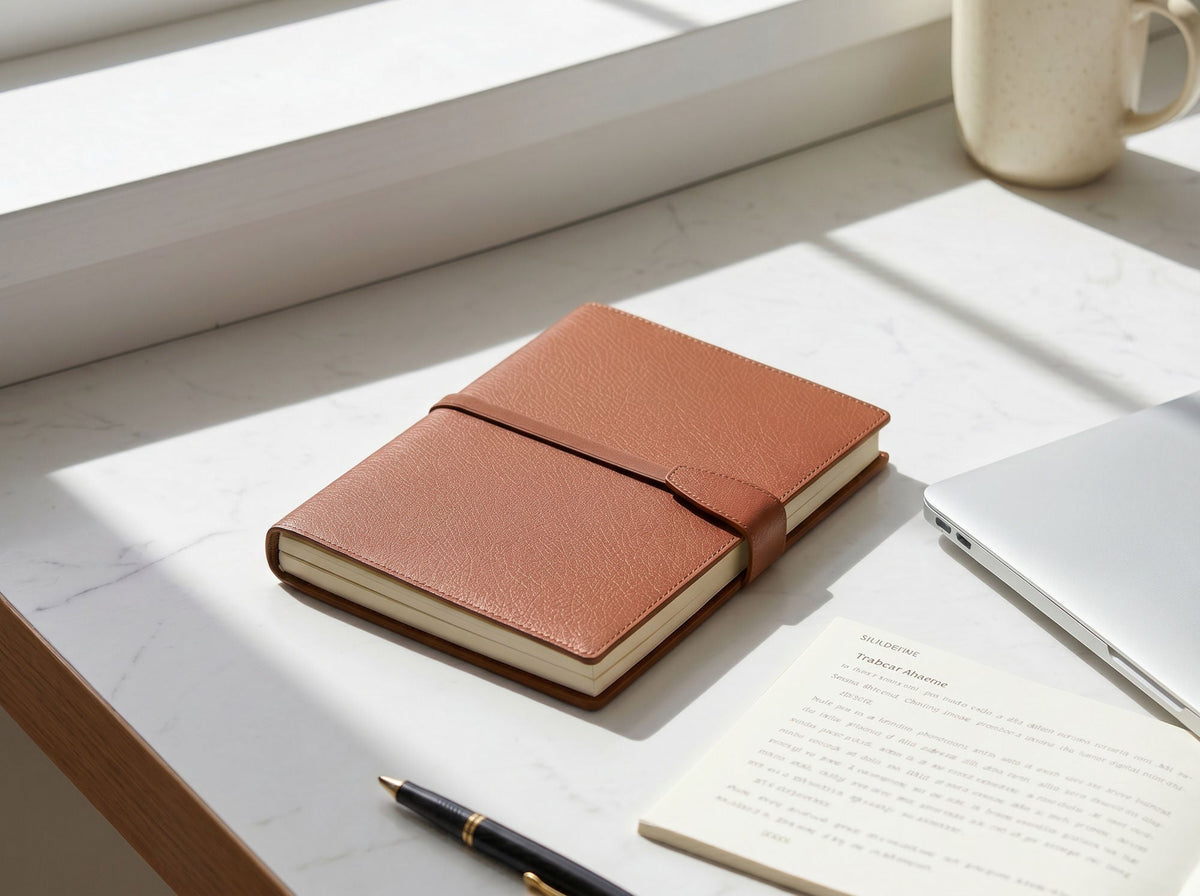
Choose lined paper if your journal is mainly for meeting notes, daily writing, planning, or longer reflections. Choose dot grid if you regularly combine writing with trackers, diagrams, tables, or sketches. Neither format is inherently better: the right choice depends on how you use the page. A refillable A5 leather journal gives you the freedom to begin with a practical lined notebook and replace it later when your needs or writing habits change.
TL;DR:
- Lined paper is the simplest choice for continuous writing, professional notes, and everyday planning.
- Dot grid paper offers more flexibility for layouts, lists, trackers, diagrams, and light sketching.
- Paper weight, ruling contrast, binding, and notebook thickness can matter as much as the page format.
- The Maruse Leather Journal includes a replaceable lined A5 notebook and is designed to be used for years rather than discarded when the pages are full.
- If you choose a different refill, check its external dimensions and thickness to ensure it fits the cover correctly.
Table of Contents
- Quick Comparison: Dot Grid vs Lined Paper
- When Lined Paper Is the Better Choice
- When Dot Grid Paper Is the Better Choice
- How to Choose the Right Format
- Paper Details That Matter
- Why a Refillable Leather Journal Makes Sense
- The Maruse Leather Journal
- Frequently Asked Questions
Quick Comparison: Dot Grid vs Lined Paper
The best paper format is the one that makes writing feel natural. Lined and dot grid paper offer different kinds of guidance, and each is suited to a different way of organizing ideas.
| Feature | Lined paper | Dot grid paper |
|---|---|---|
| Best for | Meeting notes, journaling, lists, planning, and long-form writing | Trackers, diagrams, tables, bullet journaling, and mixed writing and sketching |
| Visual guidance | Clear horizontal structure | Subtle horizontal and vertical reference points |
| Ease of use | Immediate and familiar | Flexible but may require more planning |
| Professional notes | Excellent | Good, especially when notes include diagrams or frameworks |
| Creative layouts | More limited | Excellent |
If most of your pages contain sentences, lists, and meeting notes, lined paper is usually the more comfortable option. If your pages combine words with boxes, columns, diagrams, calendars, or sketches, dot grid provides greater freedom.
When Lined Paper Is the Better Choice
Lined paper reduces friction. You can open the notebook and begin writing without deciding where a heading, paragraph, or list should sit. The horizontal rules keep handwriting aligned and make pages easy to review later.
It is particularly well suited to:
- meeting notes and action points;
- daily reflections and personal journaling;
- project notes and task lists;
- lecture notes and study summaries;
- drafts, ideas, and continuous writing.
For professionals who move between a desk, meetings, and travel, lined paper remains a dependable all-purpose format. Its limitation appears when the page needs to accommodate complex layouts. Tables, diagrams, and freehand sketches can feel constrained by continuous horizontal lines.
When Dot Grid Paper Is the Better Choice
Dot grid paper offers guidance in two directions while remaining visually lighter than squared paper. The dots help align text, boxes, columns, and diagrams, but they tend to recede into the background once the page is filled.
It works especially well for:
- bullet journaling and habit tracking;
- weekly or monthly planning layouts;
- tables, process maps, and simple diagrams;
- hand lettering and structured sketches;
- notes that mix writing with visual thinking.
Dot grid is not automatically the most versatile choice for everyone. A person who mainly writes paragraphs may find the dots less intuitive than lines, while someone who enjoys designing each page may appreciate the extra flexibility.
How to Choose the Right Format
Before choosing a notebook or refill, consider how you use most of your pages rather than how you imagine using them.
- Identify your main activity. For continuous writing and professional notes, choose lined paper. For layouts and mixed visual notes, consider dot grid.
- Look at your current notebook. If your pages are mostly paragraphs and lists, lines already support your natural habits. If you frequently draw boxes, arrows, or columns, dots may be more useful.
- Consider your writing instrument. Fountain pens, rollerballs, gel pens, and markers behave differently depending on paper weight and finish.
- Think about portability. An A5 notebook offers a practical balance between writing space and a size that can be carried to work, meetings, or while traveling.
- Check refill compatibility. Format alone is not enough: the notebook’s external dimensions, thickness, and construction must work with the leather cover.
Paper Details That Matter
The ruling is only one part of the writing experience. Paper weight, opacity, surface texture, and the contrast of the printed lines or dots all affect how a notebook feels in daily use.
- Paper weight: heavier paper generally reduces show-through, although pen performance also depends on coating and surface treatment.
- Opacity: more opaque pages make it easier to use both sides without the previous page becoming distracting.
- Surface: smoother paper can make some pens glide more easily, while a slightly textured surface provides more feedback.
- Line or dot contrast: subtle gray markings guide the hand without competing with the writing.
- Notebook thickness: a refill that is significantly thicker than the original may prevent a leather cover from closing or sitting correctly.
A short pen test is often more useful than relying on paper weight alone. Try the pens you normally use, check both sides of the page, and look for feathering, bleed-through, or excessive show-through.
Why a Refillable Leather Journal Makes Sense
A conventional notebook is replaced when its final page is filled. A refillable leather journal separates the long-lasting cover from the paper inside. The notebook can change while the leather continues to develop character through use.
This makes a refillable design practical for changing routines. You may begin with lined paper for meeting notes and later prefer a compatible dot grid insert for planning or creative work. The leather cover remains familiar, while the pages adapt to a new purpose.
Refillability also allows a well-made object to stay in daily use for years. Instead of treating the journal as disposable, you preserve the part designed to age beautifully and replace only the paper when necessary.
The Maruse Leather Journal
The Maruse Leather Journal is handcrafted in Italy from full-grain pebbled leather and lined with soft suede. It is built around a replaceable A5 lined notebook, included with the cover, and is designed for notes, ideas, planning, meetings, and everyday writing.

The A5 format provides enough room for substantial notes while remaining easy to carry. The full-grain leather exterior is made to develop character over time, while the suede lining gives the interior a soft, refined finish.
The included notebook is lined, making it immediately suitable for professional notes and continuous writing. When it is time to replace it, choose an A5 notebook with external dimensions and thickness comparable to the original. If you prefer dot grid paper, verify the fit before purchasing multiple refills.
Personalization can make the cover distinctly yours or turn it into a thoughtful gift for a professional, writer, graduate, or anyone who still values putting pen to paper.
A journal designed to outlast the pages inside.
Discover the refillable Maruse Leather Journal, handcrafted in Italy and ready to personalize.
Frequently Asked Questions
Is dot grid or lined paper better?
Lined paper is generally better for continuous writing, meeting notes, and straightforward planning. Dot grid is better for layouts, trackers, diagrams, and pages that mix writing with visual organization. The best format depends on your main use.
Which paper format is best for a work journal?
For most professional note-taking, lined paper is the simplest and most familiar option. Dot grid may be preferable for consultants, designers, architects, or anyone who frequently uses frameworks, tables, and diagrams.
Does the Maruse Leather Journal include a notebook?
Yes. The Maruse Leather Journal includes a replaceable lined A5 notebook, so it is ready to use as soon as it arrives.
Can the notebook inside the Maruse Journal be replaced?
Yes. The leather cover is refillable. When choosing a replacement, check that the notebook’s external dimensions and thickness are compatible with the cover.
Can I use a dot grid notebook inside the Maruse Journal?
The cover is designed around the included replaceable A5 notebook. A dot grid insert may be used if its external dimensions, thickness, and construction are compatible. Check the fit carefully before ordering multiple refills.
Can the Maruse Leather Journal be personalized?
Personalization options are available on the product page, allowing you to make the journal your own or create a distinctive gift.

Commenti